

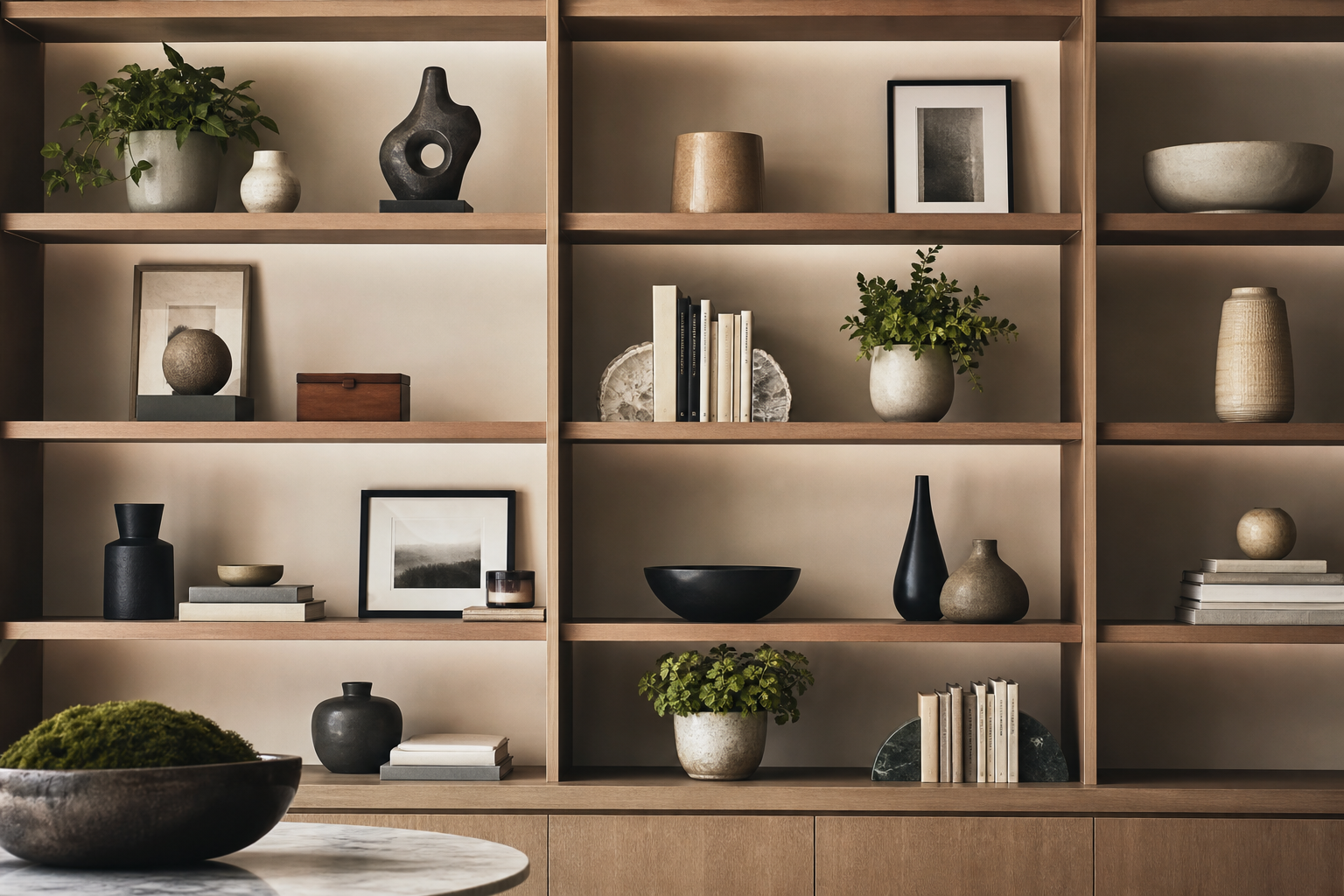
A Practical Guide to Bookshelf Styling Ideas
Well-styled bookshelves do more than store paperbacks—they frame a room, show personality, and make everyday living feel considered. This guide shares a clear, repeatable approach to styling shelves you can apply to built-ins, freestanding bookcases, or even a simple wall-mounted unit. You’ll learn how to set a vision, build a solid foundation with books, layer objects for depth, and keep everything balanced over time.
Start with a vision
Before you move a single book, get specific about the mood and function you want your shelving to support. A quick vision keeps choices consistent and prevents visual noise.
- Define the role: display, storage, or a true hybrid.
- Pick a vibe: minimalist and airy, warm and collected, or graphic and modern.
- Choose a loose color story: two to three anchor tones plus a metal or wood finish.
- Note constraints: kids at home, rental walls, or narrow shelves that limit object depth.
Snap a reference photo of the room and shelf. As you style, compare back to ensure your choices support the whole space, not just the shelf itself.
Build your foundation: books and basics
Books are the most versatile styling tool you have. They add color, texture, and structure—and they’re infinitely rearrangeable. Start with them to establish baseline order.
- Sort by size and subject. Grouping similar heights prevents a choppy skyline and makes later layering easier.
- Decide on orientation. Combine vertical rows with a few horizontal stacks for rhythm. Horizontal stacks can act like mini pedestals for decor.
- Trim dust jackets if desired. If spines feel too busy, remove some jackets to reveal cloth bindings and subtler textures.
- Stage by shelf. Place taller books on lower shelves for visual gravity; reserve eye-level for your most attractive sets or favorite reads.
Next, add a few dependable basics that play well with books:
- Bookends that introduce shape (arches, spheres, or clean cubes).
- Closed storage boxes to hide remotes, tech, or paper clutter.
- Small trays to corral loose items and create clear boundaries.
Add layers of height and depth
Flat styling reads as lifeless in a three-dimensional space. Depth and varied height create interest from multiple viewing angles.
- Use the “tall-medium-small” formula. On any shelf, include one taller element, one mid-height, and one low element. This simple trio keeps compositions lively.
- Stagger depth. Nudge some items slightly forward and some slightly back so the eye travels in and out, not just left to right.
- Pedestal trick. Use a short stack of books or a low box as a plinth to boost a small sculpture or vessel.
- Anchor corners. Place a substantial object (a large book stack, a lidded box, or a sturdy vase) at one end to prevent a floating, top-heavy feel.
Balance textures, colors, and materials
Great shelves mix finishes so nothing feels one-note. Instead of obsessing over matching, focus on balancing contrasts.
- Texture variety: pair smooth ceramics with woven baskets; glass with matte stone; linen book cloth with polished metal.
- Color pacing: echo accent colors at least twice across the whole unit. If you introduce a terracotta object on the left, repeat terracotta on another shelf to the right.
- Finish distribution: don’t cluster all wood or all metal. Disperse materials so each shelf has a mix.
- Neutrals as glue: keep a backbone of black, white, or natural wood to tie bolder tones together.
Create visual rhythm and negative space
Rhythm guides the eye. Negative space lets it rest. Together they prevent that overstuffed, “store display” look.
- Repeat shapes: bowls, boxes, or cylinders that recur create harmony.
- Vary direction: alternate vertical book runs with horizontal stacks to avoid monotony.
- Protect breathing room: leave at least one clean gap on each shelf—no object, just wall or back panel. This emphasizes the items you keep.
- Respect edges: avoid pushing everything flush to the front; a slight inset looks tailored.
Personalize with art and meaningful objects
The best shelves feel collected, not manufactured. Add pieces that speak to your history and interests—then edit so the story reads clearly.
- Lean framed art behind books to create layered backdrops without drilling.
- Mix media: a small painting, a photograph, and a sculptural object energize one another.
- Use souvenirs as accents, not a catalog. Group travel mementos in one tight vignette rather than scattering them everywhere.
- Add greenery: a trailing plant softens hard lines and brings life; pick a pot that echoes an existing finish.
Style by room and purpose
Different rooms ask shelves to work differently. Use these considerations to keep your styling practical day to day.
- Living room: balance display and function. Hide cables or remotes in a box; keep the center shelves lighter to avoid competing with a TV.
- Home office: prioritize reach. Place reference books and trays at arm’s height; keep decorative pieces higher or lower.
- Bedroom: soften edges. Use fabric boxes, warm woods, and a few personal photos; dimmer-safe lamps on nearby surfaces maintain a calm mood.
- Entryway: simplify. A bowl or tray for keys, a covered box for mail, and one statement art piece prevent clutter.
Common layout formulas that work
When in doubt, lean on proven compositions. Try them shelf by shelf, then tweak for your objects.
- Triangle grouping: position three items so their heights form a triangle. Works with a vase, a small stack of books, and a low bowl.
- Stack + topper: lay 3–5 books horizontally; add a small sculpture or candle holder to crown the stack.
- Mirror the ends: place similar-weight items at left ends on one shelf and at right ends on the shelf below to create a subtle zigzag rhythm.
- Center hero: choose one striking piece for a middle shelf and keep neighbors restrained.
Editing like a pro
Editing is where shelves transform from good to great. If styling feels stuck, remove more than you add.
- Pull everything off and rebuild. Fresh starts reveal better groupings.
- Limit each shelf to two or three “moments.” If you count five or more, merge or remove.
- Photograph, then squint-test. Photos flatten distractions so you can spot crowding or imbalance quickly.
- Audit function. If an item has no purpose or story, consider letting it go.
Maintenance and seasonal refresh
Styled shelves are living displays. A light quarterly reset keeps them fresh and dust-free without redoing everything from scratch.
- Rotate covers: flip a few books to showcase seasonal colors.
- Swap textiles: change a basket, box, or small linen element to nod to the season.
- Prune plants and dust edges: clean lines read better when surfaces are cared for.
- One-in, one-out rule: if a new object joins the shelf, remove or relocate another to preserve negative space.
Quick checklist to style any shelf
- Vision: role, vibe, color story set?
- Foundation: books sorted, vertical and horizontal mixes placed?
- Layers: tall–medium–small present, with depth staggered?
- Balance: textures and finishes dispersed, accent colors echoed?
- Rhythm: repeated shapes, intentional gaps for breathing room?
- Personality: art, photos, or mementos edited into one or two focused vignettes?
- Function: daily-use items boxed or corralled at reachable heights?
- Edit: remove one item per shelf for clarity; take a photo to confirm.
FAQ
How many books should I show versus store elsewhere?
Show the books you reach for often and the ones that add visual interest through color or texture. If a shelf looks crowded, pull 15–20% of the books and store them in a closed cabinet or rotate them seasonally. Breathing room helps featured titles and objects shine.
Is it okay to organize books by color?
Absolutely—if it supports your vision and you can still find what you need. Color-blocking can look striking on open shelves. To keep function, maintain a simple index elsewhere (digital notes by color and title) or color-code only a single bay while organizing the rest by genre or author.
What’s the best way to style deep shelves?
Work in layers. Place a larger leaning artwork or tall object at the back, then books mid-depth, and a small, low-profile piece near the front to avoid a cavernous look. Use boxes or risers to bring shorter items forward so they don’t get lost.
How do I keep open shelves from looking messy?
Repeat a few shapes and finishes, use closed boxes for stray items, and leave clear negative space on each shelf. Finish by aligning the leading edge of books and insetting objects slightly from the front to create a tailored line.
Can I mix family photos with art and objects?
Yes. Keep photos grouped in one small vignette rather than scattering. Use two matching frames or a consistent finish so the group reads as a single visual unit among varied textures and colors.