

7 Edison Bulb Ambiance Ideas for Warm, Modern Living Spaces
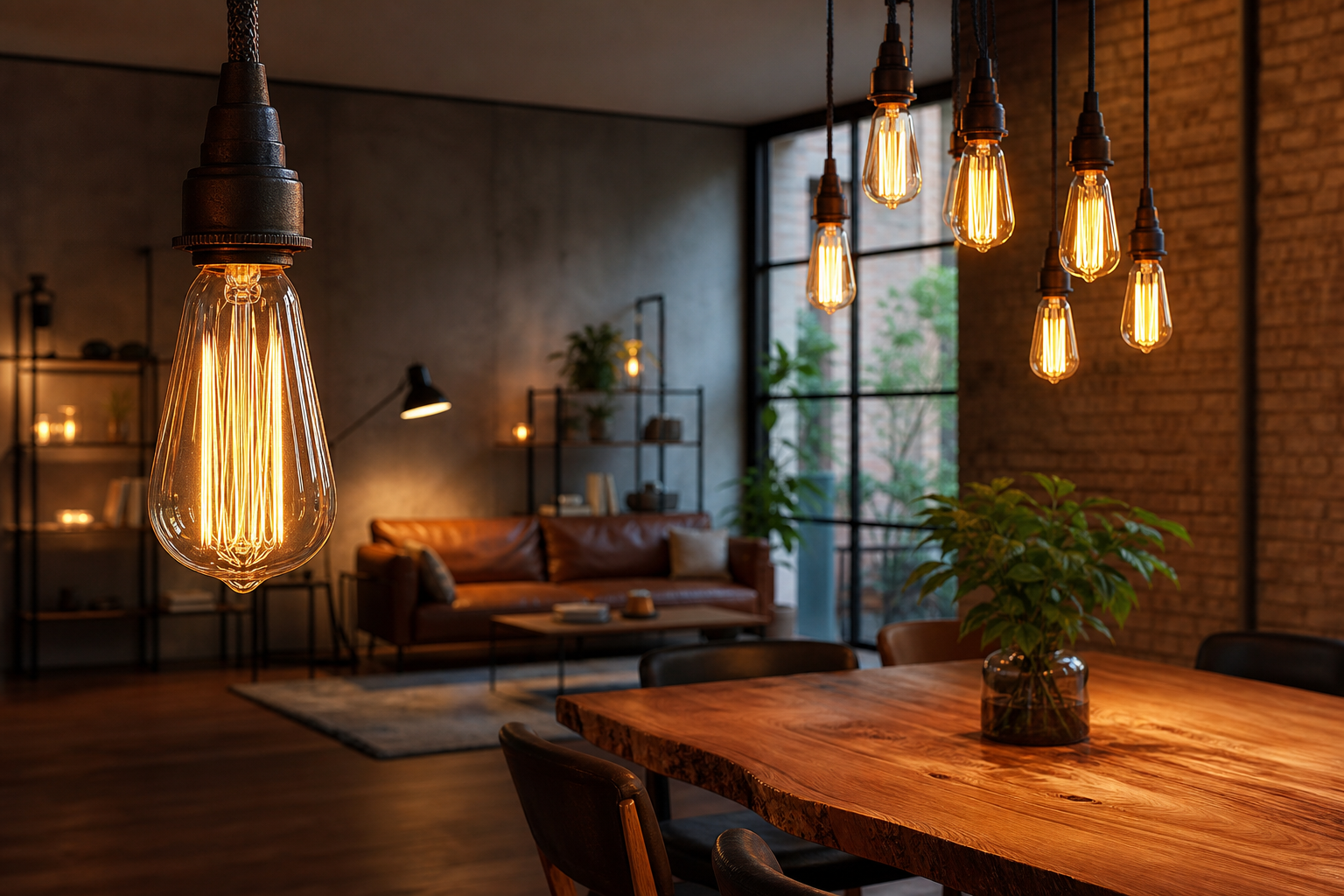
1. Living room: Layer Edison pendants and floor lamps to create soft pools of light
Use exposed Edison-style bulbs as a character layer within a multi-source lighting plan rather than the room’s only light. Designers recommend introducing multiple sources so light falls in soft pools around seating zones and avoids a single harsh glare (see The Spruce on using multiple sources to create a soft, pooling effect: How to Use Lighting to Beat Mid-Winter Blues).
Practical placement: position one or two low-drop pendants over a console or an accent corner to add depth behind a sofa, then balance them with a tall shaded floor lamp to wash the seating and a table lamp next to the reading chair for task light. If you want a focused pool near a chaise or reading nook, stagger a trio of short-drop pendants to outline that area without lighting the whole room uniformly.
Styling pairings: exposed glass or open-cage pendants read modern when paired with streamlined sofas and simple side tables; choose metal finishes (brass, matte black) that echo accents elsewhere in the room to keep the look cohesive. Remember to keep task fixtures with shades or diffusers so reading and hobbies get glare-free light while Edison bulbs provide warmth and visual texture (see cozy-fixture ideas on Bob Vila: Best Light Fixtures for a Cozy Home During - Picks by Bob Vila).
Decorative uses in living rooms and adjacent zones: Edison bulbs also work as sculptural accents—string a small cluster near a window seat, suspend a single globe in a reading niche, or use a minimalist open-cage pendant near a hallway focal point. Position bulbs near mirrors or metallic frames to reflect warm light and amplify the glow without increasing output. When the bulb is the visual feature, choose fixtures designed for exposed bulbs—open-glass pendants, cord sets with finished sockets, or minimal open-cage shades—to make the hardware look intentional while balancing vintage filament looks with clean-lined furniture.
2. Dining room: Hang a single exposed Edison pendant or a small cluster over the table
Dining areas benefit from warmer color temperatures and dimmable control so meals feel intimate on lower settings and functional during serving and cleanup. Designers commonly recommend bulbs in the 2,700–3,000 Kelvin range for flattering light on skin and wood surfaces (The Spruce notes 2,700–3,000 K as a warmer choice: This Is the Easiest Designer Trick to Refresh Your Home in January (No Painting Required)).
Fixture choices: a single large exposed pendant above the table creates a modern sculptural focal point; a cluster of small Edison bulbs on staggered cords becomes a low-glare arrangement that reads purposeful when paired with a wall dimmer. For placement, center the grouping above the table’s center and keep the bulbs low enough to form a pool of light over the tabletop while maintaining sightlines across the table.
Pairing tips: match the pendant hardware finish to dining chairs or a sideboard trim for a deliberate, contemporary-meets-vintage look. For multiple-bulb groupings, aim for a balanced silhouette so the cluster reads intentional rather than improvised—see common grouping styles and proportions on Houzz: Edison Bulb Pendant Lights.
3. Bedroom: Use warm Edison bedside sconces and dimmable table lamps for layered relaxation
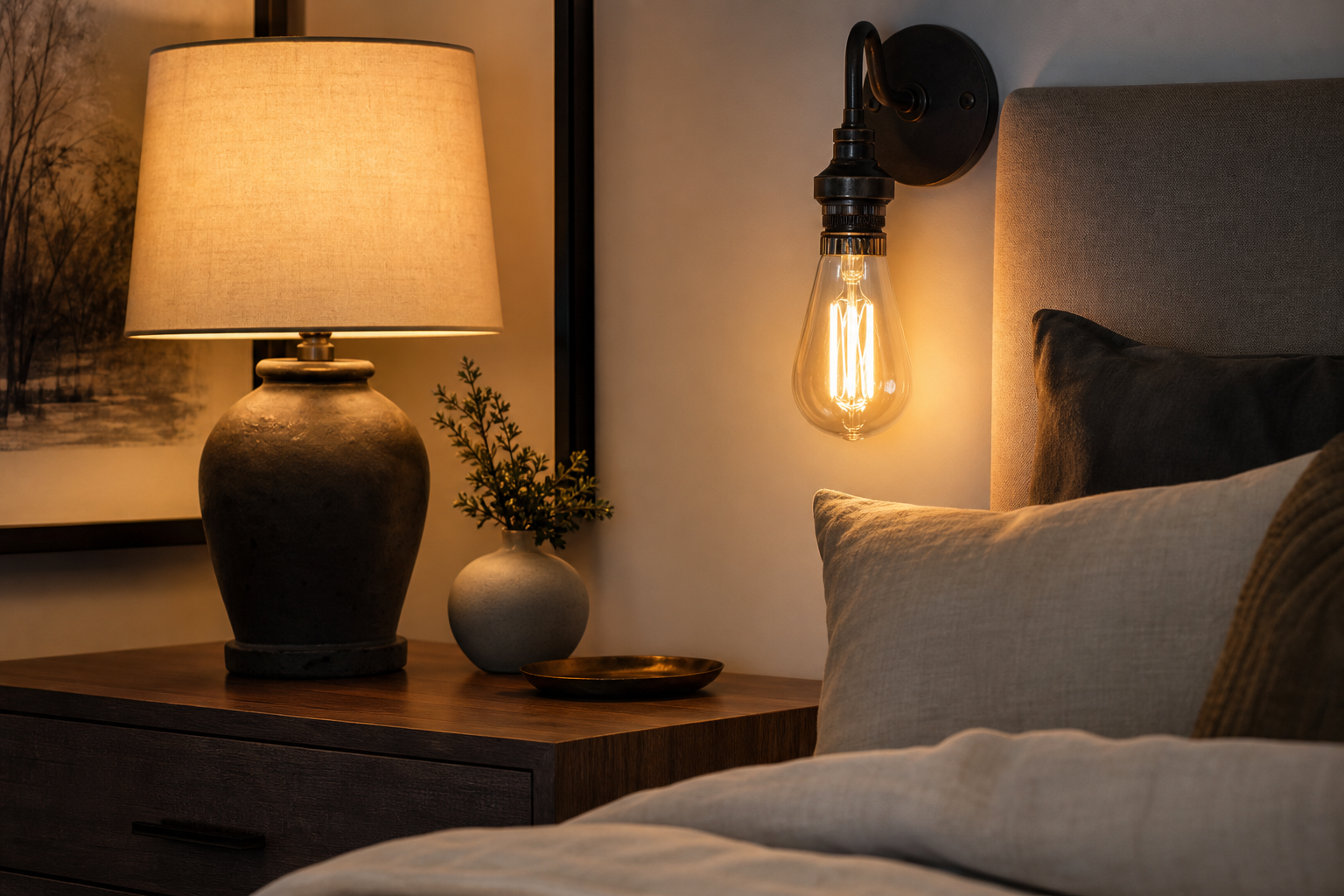
Bedrooms are easier to transition between activities when you use several smaller light sources. Fit warm Edison bulbs into wall-mounted bedside sconces for ambient glow and keep a dimmable table or swing-arm lamp for directed reading. Multiple sources let you reduce overall output for winding down while preserving a brighter option for tasks.
Design tip: choose sconces with an exposed-bulb cage or a short dropped cord in finishes that complement your headboard and nightstand hardware. If you want to keep bedside surfaces uncluttered, hardwired wall sconces with downward-facing bulbs give the look of exposed filaments while keeping table surfaces for books and devices.
Reminder: confirm bulbs and dimmers are compatible before installing dimmable fixtures—some older dimmer switches were intended for incandescent loads and can behave poorly with LED filament bulbs (see This Old House on checking dimmer and bulb compatibility: Light Bulb Buying Guide: Types, Wattage, Lumens & More - This Old House).
4. Bulb specs cheat sheet and buying checklist
Plain-language bulb specs designers use when choosing Edison-style bulbs:
- Color temperature (Kelvin): Aim for warm tones around 2,700–3,000 K to keep interiors flattering and cozy (The Spruce recommends this warmer band for intimate interiors: This Is the Easiest Designer Trick to Refresh Your Home in January (No Painting Required)).
- Lumens vs. watts: Shop by lumens (light output) rather than wattage alone; wattage measures energy use while lumens tell you perceived brightness. When choosing bulbs, check both numbers and compare lumen output to the room’s needs rather than relying on old incandescent-wattage assumptions (This Old House explains these key shopping terms: Light Bulb Buying Guide: Types, Wattage, Lumens & More - This Old House).
- Dimmable vs. non-dimmable: If you want adjustable ambience, buy bulbs labeled dimmable and confirm your dimmer is compatible with LED or filament-style LED bulbs. Older dimmers may need replacement for smooth LED dimming (see This Old House guidance on bulb and dimmer compatibility: Light Bulb Buying Guide: Types, Wattage, Lumens & More - This Old House).
- LED Edison alternatives: LED filament bulbs recreate the vintage filament look with much lower energy use than old incandescent filaments. Compare the LED bulb’s lumen output to the incandescent equivalent to maintain the same perceived brightness while saving energy (This Old House covers trade-offs among bulb technologies: Light Bulb Buying Guide: Types, Wattage, Lumens & More - This Old House).
Room-focused buying checklist (plain terms): match the bulb base to the fixture socket, choose a 2,700–3,000 K tone for warm ambient use, confirm intended bulbs are dimmable if you want adjustable mood lighting, and compare lumen figures to the brightness you expect for the room’s activities. For examples of fixtures that work well with Edison bulbs, see curated lighting categories and lamp styles on the site's lighting page: lighting (browse fixture shapes, finishes, and exposed-bulb options before you buy).
5. Quick installation, safety checklist, and small-space tips
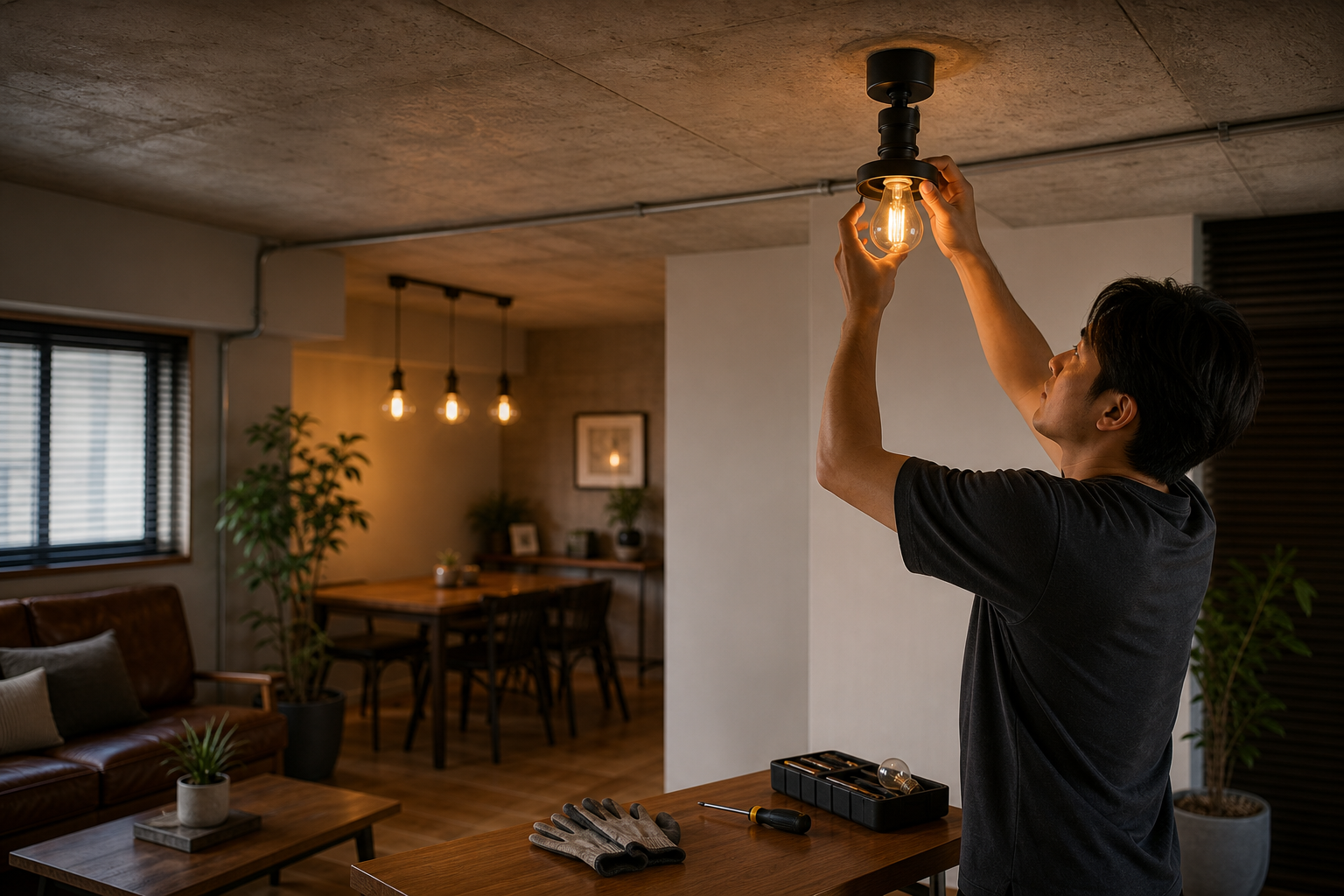
Keep these non-technical steps in mind before wiring or swapping bulbs:
- Turn power off at the switch before changing bulbs in fixtures on a standard socket. For ceiling fixtures, switch power off at the circuit if you are uncertain.
- Confirm the fixture’s maximum recommended wattage and do not exceed it; for LED Edison-style bulbs, match the bulb base and size so the bulb fits the shade or glass globe.
- Buy bulbs labeled for enclosed fixtures if the pendant or globe is fully enclosed—some filament-style bulbs are not rated for enclosed housings and can overheat.
- Use dimmable bulbs with a dimmer labeled compatible with LED/filament LEDs; if dimming is flickery or uneven, stop and check compatibility rather than forcing the installation.
When to call an electrician: ask a licensed electrician for hardwired fixture installs, any time you need to add a new ceiling box, or if you encounter unexpected wiring, breakers that trip, or unclear wiring configurations. Do not attempt complex wiring changes unless you are qualified—professional help prevents safety risks and code violations.
Small open-plan and compact-space guidance: in compact open-plan living, use small clusters or multi-bulb cords to define zones without heavy fixtures. A three-bulb cord above a compact dining nook or a row of mini Edison pendants to mark an entryway visually separates areas while keeping ceiling heights and sightlines open. Balance exposed bulbs with a soft wall wash from a shaded sconce or a floor lamp so the space never relies on a single point of light.
Frequently asked questions
What color temperature (Kelvin) should I choose for Edison bulbs to create a warm ambiance?
Choose warm tones in the 2,700–3,000 K range for a flattering, warm glow that suits living rooms, dining rooms, and bedrooms. That warmer band is commonly recommended by designers for intimate interiors (The Spruce: This Is the Easiest Designer Trick to Refresh Your Home in January (No Painting Required)).
How many lumens do I need for living rooms, dining rooms, and bedrooms when using Edison bulbs?
Rather than a single lumen number, match lumens to function: living and dining areas usually combine multiple sources to reach comfortable overall output, while bedside reading requires a focused brighter source. Check lumen ratings on bulb packaging and plan layered lighting so total lumens suit the room’s size and tasks (see This Old House on lumens and wattage as shopping terms: Light Bulb Buying Guide: Types, Wattage, Lumens & More - This Old House).
Are LED Edison bulbs a good option compared with incandescent Edison bulbs?
LED Edison-style bulbs reproduce the filament look while consuming far less energy; when choosing, compare the LED’s lumen output to the incandescent equivalent so perceived brightness stays consistent. This Old House explains how bulb types, wattages, and lumens affect a room’s atmosphere and efficiency (Light Bulb Buying Guide: Types, Wattage, Lumens & More - This Old House).
Can I use Edison-style bulbs with dimmer switches and do I need special dimmers?
Yes—if the bulb is labeled dimmable and your dimmer is compatible with LED or filament-LED technology. Older dimmers designed for incandescent loads may not dim LED filaments smoothly; replace incompatible dimmers or consult a professional to match dimmer and bulb type (advice from This Old House: Light Bulb Buying Guide: Types, Wattage, Lumens & More - This Old House).