

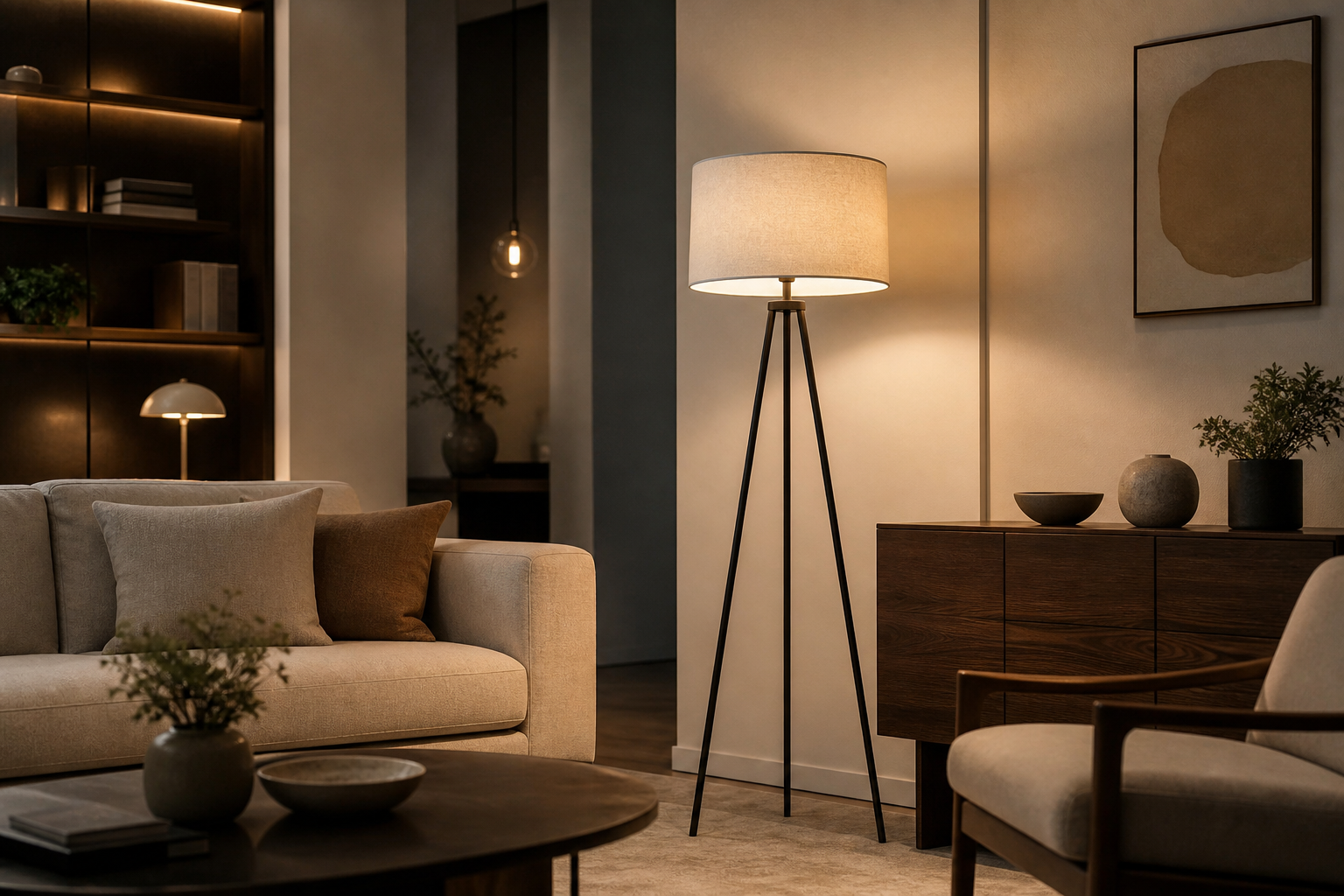
How to build floor lamp lighting layers that feel right in any room
Well-designed rooms rarely rely on a single light source. Instead, they combine multiple sources at different heights and intensities so the space looks balanced and functions well from morning to late night. Floor lamps are the most versatile tools in this toolkit: they move where you need them, add sculptural presence, and can serve as ambient, task, or accent light. This guide shows you how to plan floor lamp lighting layers that adapt to your activities and style—without guesswork.
Understand the core lighting layers
Most successful rooms blend three complementary layers. Your floor lamps can contribute to one or more at the same time.
- Ambient (general) light: The base illumination that lets you navigate comfortably. Floor lamps with upward or diffused shades can supplement overhead fixtures—or fully replace them in cozy setups.
- Task light: Focused illumination for reading, crafts, or desk work. Adjustable or articulating floor lamps with directed heads excel here.
- Accent light: Lower-intensity beams that highlight art, plants, or textures, and add depth. Slim uplights or spotlight-style floor lamps work well, as do lamps that wash walls with light.
When people ask about “floor lamp lighting layers,” they often mean a repeatable mix that feels bright enough without glare, intimate without being dim, and easy to tweak. Aim to cover all three layers, even if a single lamp does double duty.
Match floor lamp types to their job
Choosing the right style for each layer keeps your plan simple and effective.
- Column or torchiere floor lamps (uplight): Bounce light off the ceiling for ambient glow. Ideal where overhead fixtures are limited.
- Shaded floor lamps (drum, cone, or tapered): Provide soft, wide ambient light; with the right bulb, they can also support reading and conversation zones.
- Arc floor lamps: Pull light into the center of a seating group without a ceiling junction box. Great for ambient or broad task light over a table or chaise.
- Pharmacy/task floor lamps: Feature adjustable arms or heads to aim light precisely onto pages, keyboards, or handwork.
- Multi-head or tree lamps: Offer mix-and-match flexibility—one head for task, others for fill or accent. Useful in compact rooms.
- Slim uplights and spot styles: Create dramatic accent light on walls, sculptures, or plants; use sparingly to prevent hotspots.
Placement blueprints by room
These room-tested layouts help you position floor lamps with confidence. Adjust distances to suit your furniture scale.
-
Living room conversation zone:
- Place a shaded or arc floor lamp just behind or beside the main sofa arm (about 6–12 inches away) so the shade bottom sits near seated eye level for comfort.
- Add a torchiere or column lamp in a back corner to bounce ambient light off the ceiling, reducing harsh contrast with the TV or window wall.
- If you read in a lounge chair, add a pharmacy/task lamp on the chair’s open side; angle the head so light falls over your shoulder onto the page.
-
Open-plan living/dining:
- Use one ambient floor lamp at the living end and another near the dining hutch or wall to visually “anchor” each zone at night.
- Layer a task lamp for the reading seat and a subtle accent uplight to graze a feature wall or plant for depth.
-
Bedroom retreat:
- When nightstands are small, place slender shaded floor lamps to the outer sides of the bed; the switch should be reachable while seated.
- Use a low-output accent uplight to wash a textured wall or art piece; keep output gentle to avoid wakefulness late at night.
-
Home office/studio:
- Pair an articulating task floor lamp near the desk with a diffused floor lamp in a corner to soften screen contrast.
- Point any accent uplights away from monitors to prevent reflections and eye strain.
-
Hallways and nooks:
- Use a slim column or shaded lamp to gently lift overall brightness.
- Add a small spotlight-style floor lamp to highlight a mirror or sculptural piece, creating a welcoming focal point.
Bulbs, brightness, and color
Bulb choice can make or break your floor lamp lighting layers. Consider brightness, color temperature, beam spread, and rendering.
- Brightness: For ambient roles, look for medium-output bulbs so the lamp fills space without glare. For task lamps, step up the brightness but keep the beam controlled with shades or directional heads.
- Color temperature: Warmer tones feel relaxed in living and bedrooms; slightly cooler neutrals can help focus in work areas. Keep temperatures consistent within a single zone to avoid a patchy look.
- Beam spread: Frosted bulbs and fabric shades widen and soften light; clear bulbs and metal shades create tighter, punchier beams—better for accent or precise task work.
- Color rendering: If your lamp supports LED bulbs, choose options that render materials and artwork faithfully so fabrics, woods, and finishes look their best.
Dimming and control that you’ll use
Controls determine how often you actually enjoy your plan. The easier it is to adjust, the more you will layer light throughout the day.
- Built-in dimmers or multi-level switches: Many floor lamps include step dimming or rotary dimmers—great for ambient lamps that double for movie nights.
- Plug-in dimmers: Where a lamp lacks dimming, plug-in units can offer smooth control. Match the dimmer to the bulb type for compatibility.
- Smart plugs and bulbs: Scenes let you fade from bright afternoon mode to evening lounge mode with one tap. Keep at least one physical control handy for guests.
- Zonal thinking: Group switches so you can brighten only the zone you’re using, not the entire room.
Styling, scale, and shade choices
Even perfect photometrics fall flat if the lamp’s scale or materials fight the room. Use these checks before you commit.
- Height harmony: In seating areas, aim for the shade’s lower edge to land near seated eye level. Very tall torchiere lamps can exceed this, which is fine if their light is aimed up and out of view.
- Proportion to furniture: A substantial sofa or sectional can visually handle a larger arc or drum-shade lamp; slender chairs pair better with trimmer profiles.
- Shade opacity: Linen and parchment diffuse for ambient warmth; metal or opaque shades focus light for task or accent roles.
- Finish coordination: Echo one or two metal or wood tones already present in hardware, frames, or tables to keep the look cohesive.
- Base stability: Ensure the base footprint suits the traffic pattern and rug thickness; wobble is both a safety and styling issue.
A simple 3-lamp starter plan
If you’re building from scratch, this minimalist setup works in many living rooms and open plans. It balances brightness, comfort, and flexibility without clutter.
- Ambient anchor: A torchiere or column floor lamp in a rear corner to bounce light off the ceiling and lift the whole room.
- Conversation lamp: A shaded or arc lamp flanking the sofa to create inviting, glare-controlled light.
- Precision task: An adjustable pharmacy-style floor lamp by your favorite reading chair, aimed so light falls over the shoulder.
From there, add a subtle accent uplight on a feature wall if you need more depth, or a second shaded lamp to balance long rooms.
Glare control and visual comfort
The fastest way to ruin a layered scheme is a bulb in your line of sight. Keep these comfort rules in mind:
- Position lamp heads so you don’t see bare bulbs from common seating angles.
- Use diffusers or frosted bulbs in shades that sit above eye level.
- Aim task beams onto surfaces, not into faces; tilt heads slightly downward and offset to the side.
- For TV rooms, favor indirect ambient light (bounce or diffused) to reduce screen reflections.
Safety clearances and cord routing
Great lighting is also safe lighting. A few preventative habits keep your setup tidy and reliable.
- Give lamps breathing room from drapes and soft furnishings to avoid heat buildup.
- Route cords along baseboards or under furniture edges; secure where they cross traffic paths.
- Use appropriate bulbs for the lamp’s maximum rating, and check that plugs fit outlets securely.
- On rugs, ensure bases sit flat to prevent tipping; use furniture coasters if needed for stability.
Common mistakes to avoid
- One lamp syndrome: Relying on a single bright floor lamp creates harsh shadows and eye strain. Layer at least two sources.
- Mismatch of bulb and role: A clear, high-output bulb in a bare shade can glare; choose frosted or diffused for ambient duties.
- Ignoring corners: Dark corners make rooms feel smaller. A column or arc lamp can even out the perimeter.
- No dimming: Fixed output locks you into a single mood. Add dimmers or multi-level bulbs to adapt from day to night.
- Overscaling arcs: Large arcs overwhelm compact seating arrangements; double-check reach and shade size against your layout.
Room-by-room checklist
Use this quick list when planning floor lamp lighting layers. Check off what applies to your space.
- Do I have one ambient source that lifts the whole room without glare?
- Is there a dedicated task source at each activity seat?
- Where can a subtle accent lamp add depth or highlight texture?
- Are color temperatures consistent within each zone?
- Can I dim at least one lamp per zone?
- Are sightlines free of bare bulbs from typical seating angles?
- Are cords routed safely and bases stable on the flooring?
FAQs
How many floor lamps do I need in a living room?
For balanced layering, start with two: one ambient (such as a torchiere or shaded lamp) and one task lamp by the main reading seat. In larger rooms, a third lamp can provide accent or fill on the opposite side for symmetry and depth.
What height should a floor lamp be for reading?
Position the lamp so the light source is just above and slightly behind your shoulder, with the shade bottom near seated eye level. The exact height varies with furniture, but the goal is to illuminate pages evenly without casting your own shadow.
Should floor lamps match my table lamps?
They do not have to match, but they should coordinate. Keep finishes to one or two related tones, maintain similar color temperatures in the bulbs, and vary silhouettes for interest while staying proportional to your furniture.
Can a floor lamp replace overhead lighting?
Yes, if layered well. Use an uplight or arc lamp for ambient brightness, pair it with a shaded lamp for comfortable fill, and add a task lamp where you read or work. Dimming is especially useful in overhead-free setups.
What bulb type is best for shaded floor lamps?
Frosted bulbs often produce the most comfortable, even glow inside fabric or paper shades. Choose output appropriate to room size and activity, and keep color temperature consistent with nearby sources.