

Dining chair fit explained before you shop
How Dining Chairs Shape Comfort and Table Fit
Short answer. A dining chair works only when its seat relationship suits the table, its arms and back clear the table as intended, its width fits the available places, its pull-out path leaves usable circulation, and the actual diner finds it comfortable. Measure the table, room and delivery route first. Then compare current product specifications and test comfort rather than choosing from appearance alone.
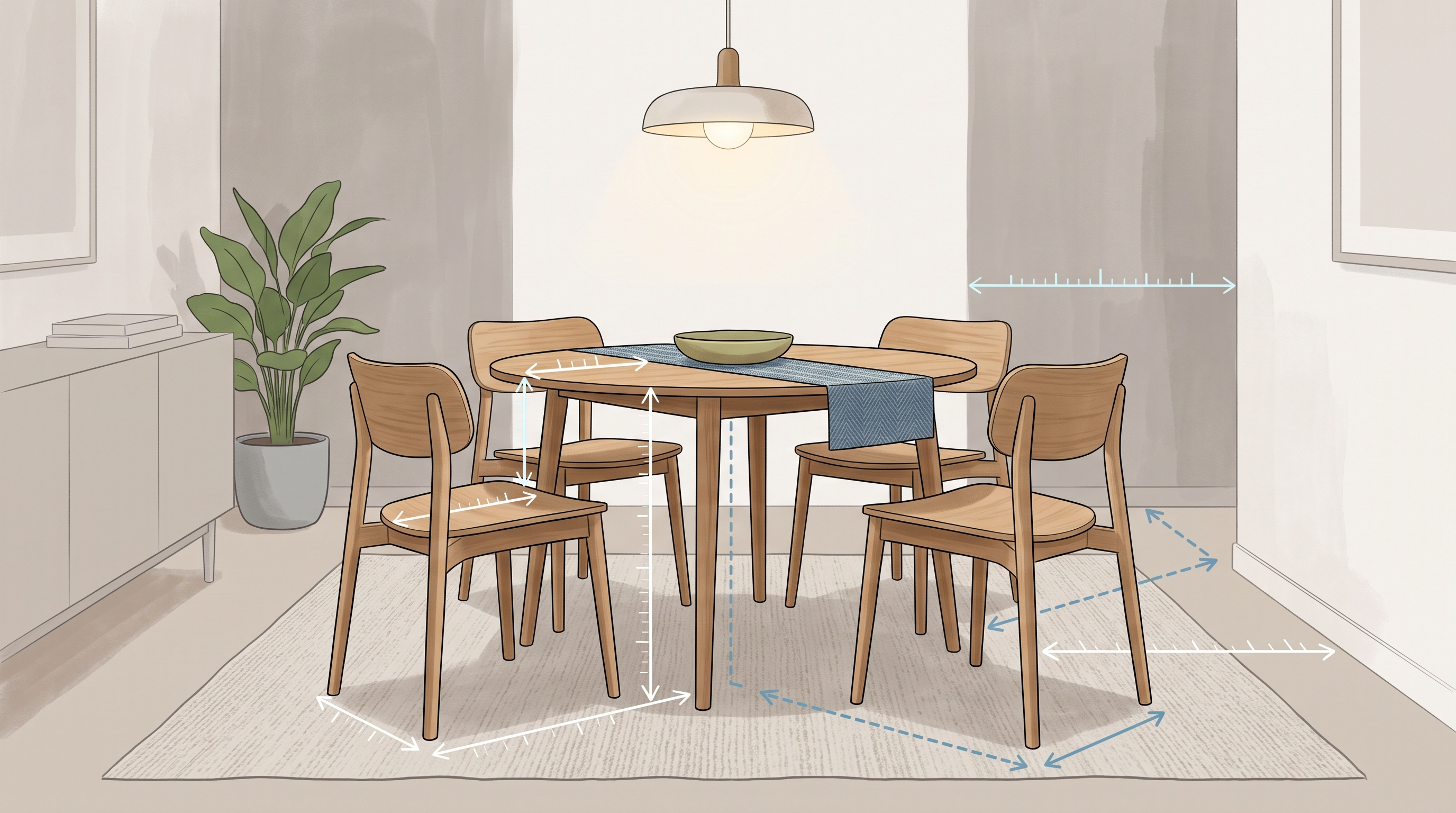
A chair must fit the table, the diner and the room at the same time.
Think of the chair, table, diner and room as one system
A dining chair can look perfectly proportioned by itself and still be wrong at the table. The seat may sit too high or low for a particular tabletop. Arms may collide with an apron or prevent the chair from tucking in. A wide back may reduce the number of usable places. Even when the chair fits under the table, a nearby wall can make it difficult to pull out and sit down.
Comfort is also contextual. A chair used for quick breakfasts has a different job from one used for long meals, homework, games or work calls. A deep seat may feel relaxed to one person and unsupported to someone with shorter legs. A sculpted back may feel excellent for one body and restrictive for another. Specifications narrow the field, but sitting in the chair—or comparing it with a chair that already works for you—is the stronger comfort test.
AFBDECOR separates its dining chair collection from its dining table collection. That makes it possible to compare pieces individually, but it does not mean any chair automatically fits any table. Current dimensions, materials, finishes, price, stock and policies must be checked on the exact product pages.
Understand the measurements that control dining-chair fit
Use this article roadmap to review the key sections in order, then verify current details for your situation before acting.
| Measurement | Why it matters | Measure against | Common oversight |
|---|---|---|---|
| Seat height | Changes the working relationship between diner and tabletop | Top surface and lowest obstruction under the table | Measuring only the tabletop height |
| Overall width | Controls how many chairs can occupy one side | Usable space between legs, supports or table ends | Counting nominal table length as fully usable |
| Arm height and span | Determines whether an armchair can tuck in | Apron, drawers, rails and tabletop underside | Assuming arms clear because the seat does |
| Seat depth | Affects support and where the sitter’s back reaches the chair | A known comfortable chair and intended users | Equating deeper with more comfortable |
| Overall depth | Controls the chair’s footprint when occupied or pulled out | Walls, cabinets, circulation and neighbouring chairs | Planning only the tucked position |
| Back height | Affects sightlines, visual scale and handling | Table, room and intended storage position | Checking style without checking total envelope |
| Delivery envelope | Determines whether the chair can reach the room | Doors, stairs, turns and elevators | Measuring the destination but not the path |
Begin with the table you actually own or the verified specifications of the table being purchased. Measure the top, the lowest underside obstruction, usable spans between supports, and any end overhang. Repeat the measurement at each seating position because pedestal bases, trestles, corner legs and aprons can create different clearances.
Next, measure a chair that already feels comfortable. Record the seat, back and overall envelope rather than relying on a product name such as “side chair” or “armchair.” Those labels describe broad types, not standardized dimensions. A small difference can matter when several chairs are placed side by side.
Finally, simulate the footprint. Tape a simple outline on the floor or use boxes to represent the chairs in both tucked and pulled-out positions. Walk the real paths to doors, kitchens and adjacent seating. This low-cost test can expose a collision before shipping or assembly becomes part of the problem.
Match dining chairs to the way the room is actually used
Everyday family meals
Prioritize repeatable use: easy entry and exit, a footprint that works at every place, and care requirements the household accepts. Verify current cleaning and care instructions for the exact material or finish; do not assume that a surface is stain-resistant or suitable for children.
Long dinners and multipurpose tables
When people sit longer, test the seat, back and arm position over time. A brief showroom sit may not reveal pressure or posture issues. If the table doubles as a desk or game surface, make sure the working height relationship also feels practical.
Small dining spaces
Overall depth and pull-out space may matter more than the tucked-in image. Armless chairs can reduce one type of interference, but that does not automatically make them narrower or more comfortable. Compare verified total dimensions.
Mixed seating
Using distinct end chairs and side chairs can create visual variety, but check whether seat heights, widths and arm clearances work together. A mixed set should still offer consistent access to the table.
Accessibility needs
Accessibility is person- and setting-specific. The U.S. Access Board’s guidance on dining surfaces and knee/toe clearance illustrates why table geometry and clear floor space matter, but it does not certify a particular chair or establish requirements for every home. Consult qualified local guidance and the actual user.
Use a consistent checklist for every dining chair
- Record the exact product name and current page URL.
- Copy verified overall, seat and arm dimensions without rounding.
- Compare the chair with the table’s lowest underside clearance and usable spans.
- Simulate tucked, occupied and pulled-out positions in the room.
- Check the delivery route and whether assembly is required.
- Read the current material, finish and care details without inferring durability.
- Confirm load information, intended use and safety instructions if published.
- Review current stock, price, delivery, return and warranty terms.
- Search the exact brand and model in the official recall databases relevant to where it will be used.
- Test comfort with the intended diners whenever possible.
For Canada, Health Canada maintains a consumer product recall and safety alert database. In the United States, the Consumer Product Safety Commission provides its own recall database. A search result is only useful when the product identity matches, so keep model and purchase records rather than searching by appearance.
If a current product page omits a decision-critical detail, use AFBDECOR’s contact page before buying. Ask a narrow written question and retain the answer. Do not substitute a specification from a similar-looking chair.
Common dining-chair mistakes to avoid
Matching style but not geometry
Colour and silhouette cannot prove that a chair fits under the table or leaves room to sit. Complete the measurement map first.
Using only the table’s top height
Aprons, rails, drawers and supports can reduce usable clearance. Measure the lowest relevant obstruction at each position.
Multiplying chair width without adding movement
A mathematical row of chairs may leave no practical room for hands, elbows or entry. Simulate the occupied arrangement instead of relying on a tight total.
Assuming materials from a photograph
Appearance does not establish composition, finish, care, durability or environmental claims. Use the current specification and ask when it is unclear.
Ignoring returns and delivery constraints
A chair can be the wrong fit even when it reaches the home undamaged. Confirm current delivery, assembly and return terms before purchase.
Frequently asked questions about dining chairs
How much space should be between a dining chair and table?
There is no single number that proves comfort for every chair, table and person. Compare the verified seat height with the tabletop and lowest underside obstruction, then test the relationship with the intended diner.
Do dining chair arms need to fit under the table?
Only if you expect the chair to tuck in that way. If the arms remain outside, include the full footprint in circulation planning. Verify the arm height and width rather than guessing.
Can different dining chairs work at one table?
Yes, when their seat relationships, widths, arm clearances and occupied footprints work together. Visual coordination alone is not enough.
How do I know whether a chair will be comfortable?
Use a familiar chair as a dimensional reference and test the new chair for the intended sitting duration when possible. Product measurements can narrow choices but cannot guarantee personal comfort.
Take the next step with verified AFBDECOR details
Save your table, room, pull-out and delivery-path measurements, then browse the current AFBDECOR dining chair collection. Compare exact product specifications against the checklist, review other current furniture through the all-products collection, and contact AFBDECOR when a material, dimension, assembly, care, price, stock, delivery, return or warranty detail is unclear. The live product information—not this general explainer—should control the buying decision.