

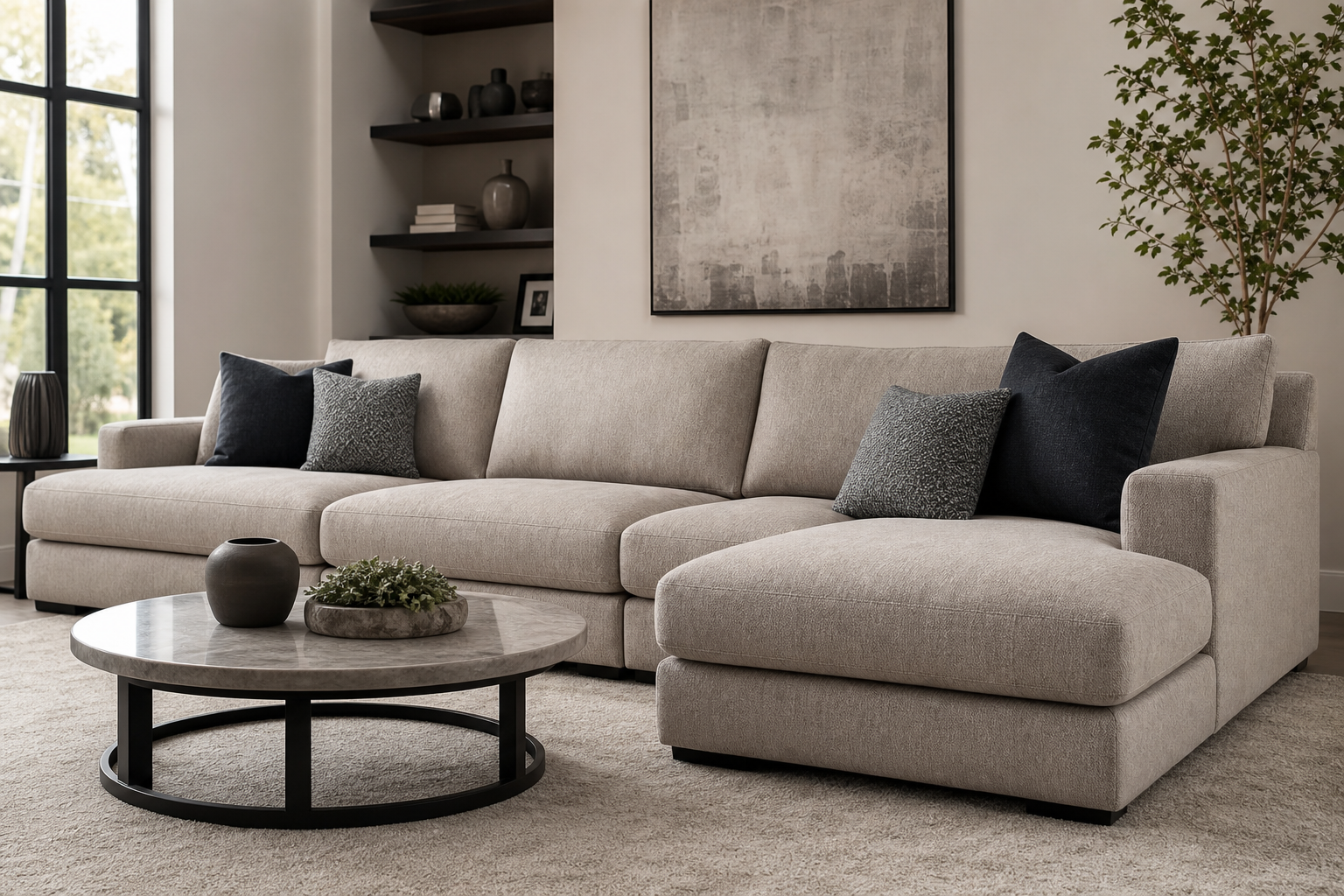
A Practical Guide to Sectional Sofa
A sectional sofa can anchor a living space, expand seating, and adapt to changing needs. This practical guide walks you through configurations, measurements, materials, upholstery, layout, care, and a concise buying checklist so you can select a sectional sofa that fits your home and habits.
What is a sectional sofa?
A sectional sofa is a multi-piece seating system designed to form different shapes and sizes. Instead of a single fixed couch, sectionals use components—such as corners, armless seats, chaises, and ottomans—that connect to create layouts suited to your room and routines.
- L-shaped: A classic configuration using a corner unit plus seats on two sides. Efficient for most living rooms and easy to float or place against walls.
- Reversible L with chaise: Similar to L-shaped, but one side ends in a chaise. Some models allow swapping the chaise from left to right for flexibility.
- U-shaped: Seats wrap around three sides, maximizing conversation and lounging. Works best in larger rooms with central coffee-table access.
- Modular: Individual components that connect with clips or brackets. You can reconfigure for parties, movie nights, or room changes.
- “Pit” style: Deep, oversized modular pieces pushed together for lounging. Great for media rooms where sprawling comfort is the priority.
- Sleeper and storage variants: Some sectionals incorporate pull-out beds or storage chaises to add function in compact spaces.
Sectionals excel when you want tailored seating: you choose arm styles, lengths, and attachments to match traffic flow, sightlines, and daily use.
Measure, plan, and configure
Measuring first ensures your sectional fits through doors, navigates halls, and sits comfortably once in place. Use these steps to avoid surprises.
Entry and path measurements
- Doorways: Measure width and height; note any trim, handles, or storm doors that reduce clearance.
- Hallways and turns: Measure narrow points and ceiling heights along the delivery path.
- Stairs and elevators: Measure width, height, landing depth, and elevator interior clearances. Confirm weight limits where applicable.
Room measurements
- Overall dimensions: Length, width, and ceiling height of the room.
- Fixed elements: Windows, radiators, built-ins, fireplaces, and outlets that affect placement.
- Rugs and focal points: If you have a rug, measure its usable area; note TV or fireplace centering for sightlines.
Clearances to preserve
- Walkways: Aim for comfortable pathways around and through the seating zone.
- Coffee table reach: Leave room to move around the coffee table while keeping it within easy reach of seats.
- Recliners and sleepers: If your sectional includes these, allow space for full extension.
Configuration selection
- Conversation-first rooms: L-shaped or U-shaped keeps people facing each other.
- TV/media rooms: Consider a chaise or deep modular for lounging, placed to avoid neck strain.
- Open-plan layouts: Use the long side of an L to subtly zone the living area from dining or kitchen spaces.
- Flexible households: Modular pieces let you reconfigure for guests, parties, or future moves.
Materials, construction, and comfort
How a sectional is built affects longevity and feel. While designs vary, paying attention to frames, support systems, cushions, and joinery helps you compare options.
Frame
- Structure: Look for sturdy frames designed to resist racking (twisting) and sagging over time.
- Joinery: Reinforced corner blocks, secure fasteners, and consistent alignment across modules support stability.
- Leg attachments: Legs that bolt to the frame rather than screw into soft blocks help reduce wobble.
Seat support
- Webbing or springs: Quality suspension distributes weight and preserves cushion shape.
- Depth and height: Seat depth influences posture; seat height affects ease of standing. Try to match these to your body and preferred sitting style.
Cushions and feel
- Foam density and layering: Multi-layer foam or foam wrapped in down-alternative can balance support and softness.
- Back cushions: Attached cushions stay tidy; loose cushions are easier to fluff and rotate.
- Edge support: Firm front edges help maintain shape and comfort when perched on the rim.
Comfort is subjective: some prefer upright support for conversation, others want sink-in lounge depth. If possible, compare dimensions like seat depth, back height, and arm height to a sofa you already find comfortable.
Upholstery and durability
Upholstery choice shapes both look and maintenance. Consider tactile feel, cleanability, and how materials respond to sunlight, pets, and everyday wear.
- Performance fabrics: Often engineered for stain resistance and easy cleaning—useful for high-traffic homes.
- Woven textiles: Tighter weaves typically snag less; looser weaves can feel plush but may be more delicate.
- Microfiber and microsuede: Smooth hand-feel and commonly easier spot-cleaning.
- Leather: Ages uniquely and is simple to wipe down; surface finish and thickness influence scratch visibility and patina.
- Color and pattern: Mid-tone colors and small-scale patterns can better disguise daily wear between cleanings.
- Sun exposure: In bright rooms, consider UV-resistant fabrics or position the sectional to reduce direct sunlight on the same panel all day.
Removable covers and modularity
- Zip-off cushion covers: Helpful for deep cleaning or future reupholstery.
- Modular slipcovers: Some systems allow swapping covers per module to refresh high-wear seats without replacing the entire sofa.
Pet- and kid-friendly considerations
- Low-pile, tight-weave fabrics typically resist snags from claws better than open weaves.
- Medium and darker tones can conceal minor stains; patterned throws add protection on high-use zones.
- Look for cushions that can be rotated or flipped to even out wear.
Layout, styling, and accessories
A sectional sets the tone for the room. Tie the space together with a rug, tables, and lighting that support the configuration and daily use.
Rug sizing tips
- Anchor the seating zone by placing the front legs of each sectional segment on the rug.
- Leave consistent floor borders around the rug to frame the area and prevent a “floating island” look.
Coffee and side tables
- Scale: Choose a coffee table roughly proportional to the inner edge of the sectional; allow comfortable circulation space.
- Height: A top near seat height is comfortable for reaching remotes, drinks, or laptops.
- Side access: Add side tables at chaise ends or armless sections where a coffee table feels far away.
Lighting and sightlines
- Overhead and task lighting: Balance general illumination with reading lamps near popular seats.
- TV and focal points: Align seat backs to minimize glare and neck strain; avoid blocking windows with tall backs where view is a priority.
Textiles and accents
- Throw pillows: Mix sizes to support posture and add depth. Use inserts that hold shape without feeling rigid.
- Blankets: Drape neatly on the chaise or across the corner for texture and quick warmth on movie nights.
- Consistency: Echo the sectional’s color or texture elsewhere—on ottomans, art, or curtains—for a cohesive look.
Care, maintenance, and longevity
Regular, simple care extends the life and appearance of a sectional sofa. Build a routine that matches your upholstery type and household traffic.
- Weekly: Light vacuum with a soft brush to remove dust and grit that cause abrasion.
- Monthly: Rotate or flip loose cushions, if possible, to even compression and wear.
- Spot cleaning: Blot spills promptly; check the manufacturer’s cleaning code before applying cleaners.
- Sun management: Use shades or rotate the sectional occasionally if panels receive uneven sunlight.
- Legs and connectors: Periodically tighten legs and module connectors to prevent wobble.
- Protective layers: Washable throws on high-use spots can protect fabric while adding style.
For leather, dust regularly and follow the recommended care guidance for your specific finish. Avoid harsh chemicals and test any cleaner on an inconspicuous area first.
FAQ
How do I decide between an L-shaped and a U-shaped sectional?
Choose based on room size and how you use the space. L-shaped fits most rooms and supports conversation without overwhelming the footprint. U-shaped offers more face-to-face seating and lounging but needs additional clearance for a coffee table and walkways.
What seat depth is best for a sectional sofa?
It depends on posture and height. Shallower seats encourage upright sitting and work well for formal conversation. Deeper seats suit lounging and taller individuals. Compare the dimensions to a chair or sofa you already find comfortable.
Are modular sectionals worth it if I move often?
Modular systems can be easier to deliver through tight spaces and adapt to new rooms. You can add or remove components over time and reconfigure the layout as needs change.
Should I get a chaise or an ottoman?
A chaise builds lounging into the silhouette and can help zone an open plan. An ottoman is more flexible: it can shift to different seats, double as a coffee table with a tray, and be removed for extra floor space.
What upholstery holds up best to pets?
Tight-weave, low-pile fabrics tend to resist snags better than open weaves. Medium or darker colors and subtle patterns can help disguise everyday marks between cleanings.
Buying checklist and next steps
Use this checklist to streamline your sectional sofa selection and avoid missed details.
- Measure delivery path: Doorways, hallways, stairs, elevators, and turns.
- Map the room: Overall dimensions, windows, radiators, outlets, and focal points.
- Choose configuration: L-shaped, reversible chaise, U-shaped, modular, pit, sleeper, or storage.
- Confirm clearances: Walkways, coffee-table reach, recliner/sleeper extension if applicable.
- Select comfort profile: Seat depth, height, cushion firmness, back style, arm style.
- Assess construction: Frame stability, joinery, reliable seat suspension.
- Pick upholstery: Fabric type, texture, color, and care requirements.
- Plan the zone: Rug size, table placement, lighting layers, and accessory storage.
- Set care routine: Vacuum schedule, cushion rotation, connector checks, sun management.